3 Days Murshidabad and Baharampur Tour Guide from Kolkata
This Murshidabad and Baharampur city tour guide from Kolkata will help you navigate the travel experience. Named after Nawab Murshid Quli Khan, the first Nawab of Bengal. It was once the capital of Bengal, Bihar, and Odisha.
The historical city is a witness to the rule of the British, the reign of Nawab Siraj-ud-Daulah, and the Battle of Plassey. During the partition, the city became part of East Bengal for one day. It is a beautiful city to learn about Bengal’s culture, traditions, and history. Visitors can tour the city via public transportation.
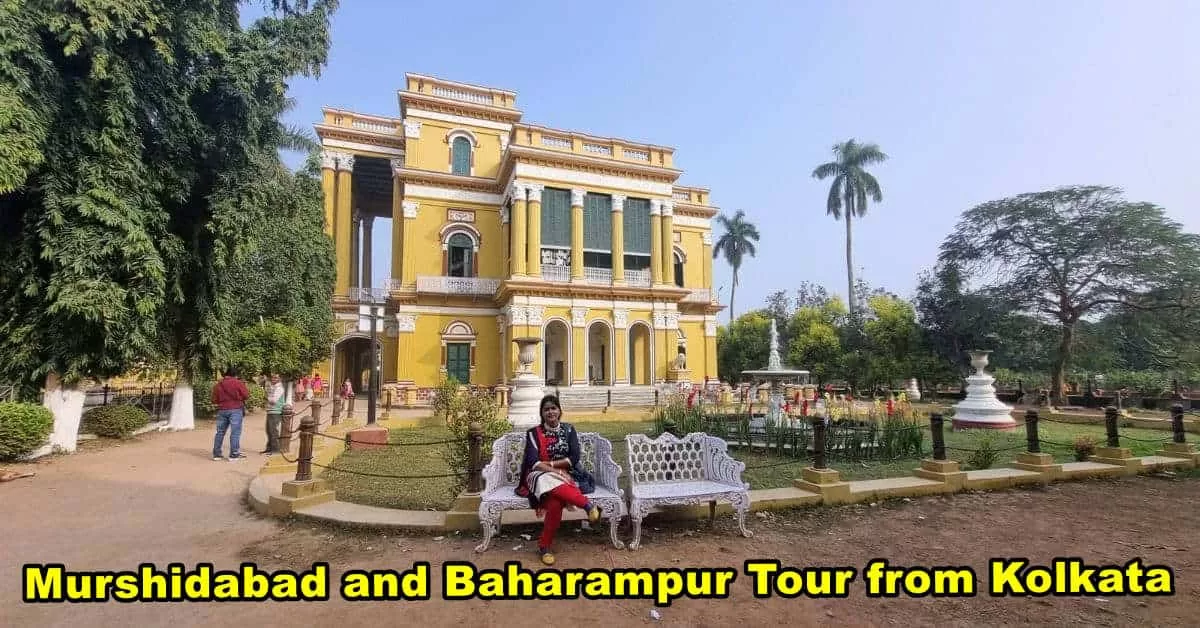
Murshidabad and Baharampur Tour Guide from Kolkata
Murshidabad and Baharampur Tour Daywise Itinerary
- DAY 1: Hazarduari Palace, Nizamat Imambara, Ghari Minar or Clock tower, Madina Mosque, Bachhawali Tope, Wasif Manzil Palace, Katra Masjid, Jahan Kosha Canon, Shri Shri Radha Madhav Jiu Temple, Motijheel and Jama Masjid, Motijheel park
- DAY 2: Kathgola Baganbari, House of Jagat Seth, Nashipur Rajbari, Nashipur Akhra, Traitor’s Gate or Namak Haram Deorhi, Mir Jafar and his family’s 1100 people’s grave, Tomb of Azimunnisa Begum, Roshni Bagh, Khoshbagh, Jagabandhu Dham or Dahapara Dham, Kiriteswari Temple, Char Bangla Temple, Bhavaniswar Mandir, Raj Rajeshwari Temple, Panchmukhi Shiv Mandir
- DAY 3: Bishnupur Kalibari, Dutch Cemetery, Byaspur Shiv Mandir, Cossimbazar Palace of Roys, Cossimbazar Sripur Palace, Old English Cemetery, Pataleshwar Temple, and Sati Daha Ghat.
Murshidabad Baharampur Tour From Kolkata
From Kolkata Station, we board the Hazarduari Express, which leaves around 6.50 a.m. It reaches Murshidabad around 10.30 p.m. Our stay this time was at Lalbagh Youth Hostel, located opposite Hazarduari Palace. The distance is 1.9 km, and the toto fare is Rs. 10 per person.
Day 1 Murshidabad Tour
Our first sightseeing was done at Hazarduari Palace, the most popular and largest tourist spot. It is part of the Archaeological Survey of India. Entry fee is Rs. 25, and it is open from 9 a.m. to 5 p.m. This place is closed every Friday. You can purchase the ticket online, and guides are not allowed to enter the palace.
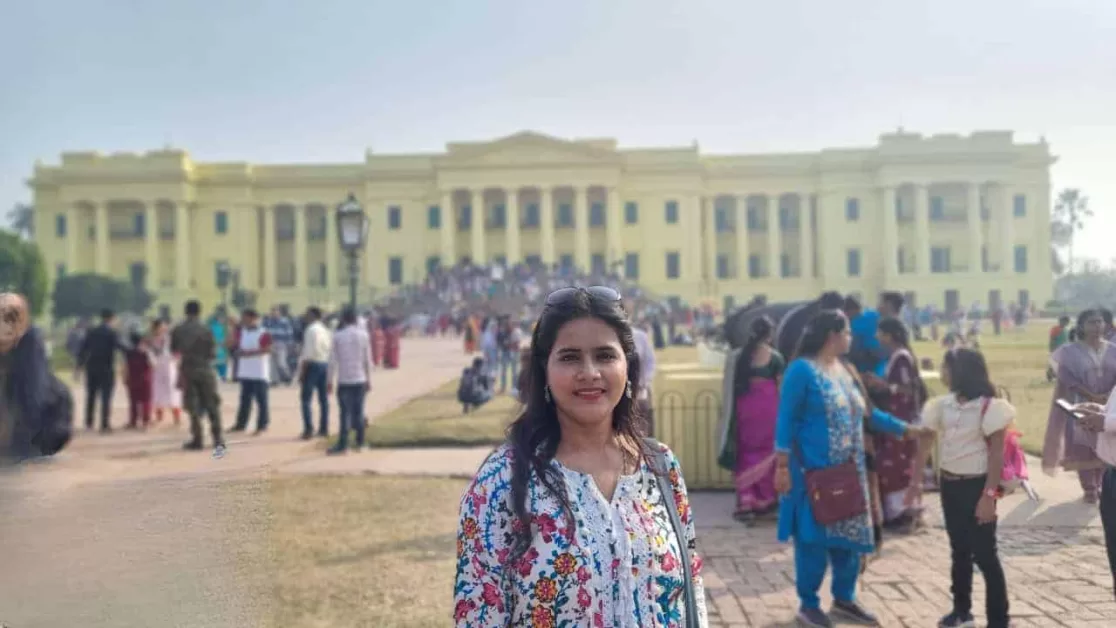
Built from 1828 to 1829 by Nawab Nazim Humayun Jah, this palace was built on the banks of the Ganges. Named Hazarduari or ‘palace with a thousand doors’, it actually has very few real doors. It is now a museum displaying the property of Siraj-ud-Daulah, weapons used in the Battle of Plassey, and many Dutch, French, and Italian paintings.
Outside the Hazarduari Palace is Nizamat Imambara. It is open to the public only during Muharram; other times, visitors can view it from outside. On the right is the Ghari Minar or Clock tower. The Madina Mosque is located just in front of Hazarduari.
The Bachhawali Tope is a canon that was fired only once and is located just outside the palace. It will take 2 or more hours to see and enjoy everything the site has to offer.
Then we visit Wasif Manzil Palace, located just beside Hazarudari Palace. A ticket price is Rs. 10. The Second Nawab of Murshidabad, Wasif Ali Mirza Khan, built this palace in 1904. Situated just beside the Bhagirathi River, it reflects Indo-European culture. It was once the home of the Nawab, but it is now a museum.
Next, we reserve a toto for 300 to visit other places in the locality. The first stop was Katra Masjid, one of the most popular places. The mosque was built between 1723 and 1724 by Murshi Quli Khan. After shifting the capital from Dhaka, he built this as the first thing. This mosque is also his resting place.
After that, we visit the Jahan Kosha Canon, 1km from Katra Masjid. The canon was made from Octa-alloy in 1637. Jahan Kosha means Destroyer of the World. It was made by Janardan Karmakar.
Then visit the Shri Shri Radha Madhav Jiu Temple, located 4 km away. In 1609, Vamsivada Ghosh brought the Radha-Madhav deities from Brindaban and offered prayers. In old times, a Madhavi tree was also here. That is why it is also known as Madhavi Kunj.
Next visit Motijheel and Jama Masjid, 2.7 km away. Jama Masjid is the resting place of Ekramulla, the brother of Siraj ud-Daulah. In 1750, Nawajish Muhammad Khan constructed this mosque. Later, go to Motijheel Park; the entry fee is Rs. 30 per person. It is open every day from 11 a.m. to 7.30 p.m. From the era of the Nawabs, Motijheel was the hub for pearl farming. The park has a toy train, a boating area, a bounce house, etc.
Day 2 Murshidabad Tour
The next day, a Toto was reserved for 500 to tour 7 places in and around the area. Kathgola Baganbari is 4 km from Hazarduari. Entry fee is Rs. 30 per person, and a guide costs Rs. 200. The palace was home to the King of Jiyaganj, Lakshmipat Singh Duggar.
It is a museum that displays furniture, paintings, and other items. At the end of this palace is the Adinathji Jain Temple. The temple is decorated with a marble painting of Pareshnath Mountain. This palace has several temples, a zoo with fish and birds, and a beautiful garden.
Then visit the House of Jagat Seth, a Bengali Jain banking family. The house has a museum displaying a hidden pathway, various mirrors and pots, and war-related weapons. The entry fee is Rs. 30 per person, and the guide is Rs. 100.
From there, we visit the Nashipur Rajbari; tickets cost Rs. 20, and it is open from morning to evening. Guides here charge Rs. 100. This palace was constructed in 1865 by Raja Kirti Chandra Singha Bahadur. It has one of the largest temples in Murshidabad. A portion of the palace has been turned into a museum.
From Nashipur Rajbari, go to Nashipur Akhra, which is five minutes away. This place is also open from morning to evening, and the entry fee is Rs. 20. Laxman Das and Manoj Ram Das came in 1868. The most fascinating thing is 254 years old brass rods and a Radha Madhav temple inside.
The Traitor’s Gate or Namak Haram Deorhi is the residence of Mir Jafar. After his betrayal during the 1957 Palassy War, his residence was named after him. Located near Namak Haram Deorhi is the burial site of Mir Jafar and his family, where 1,100 people are buried. Entry fee is Rs. 10, and the guide charges Rs. 50. It is also known as Jafarganj Cemetery and covers 4.1 acres.
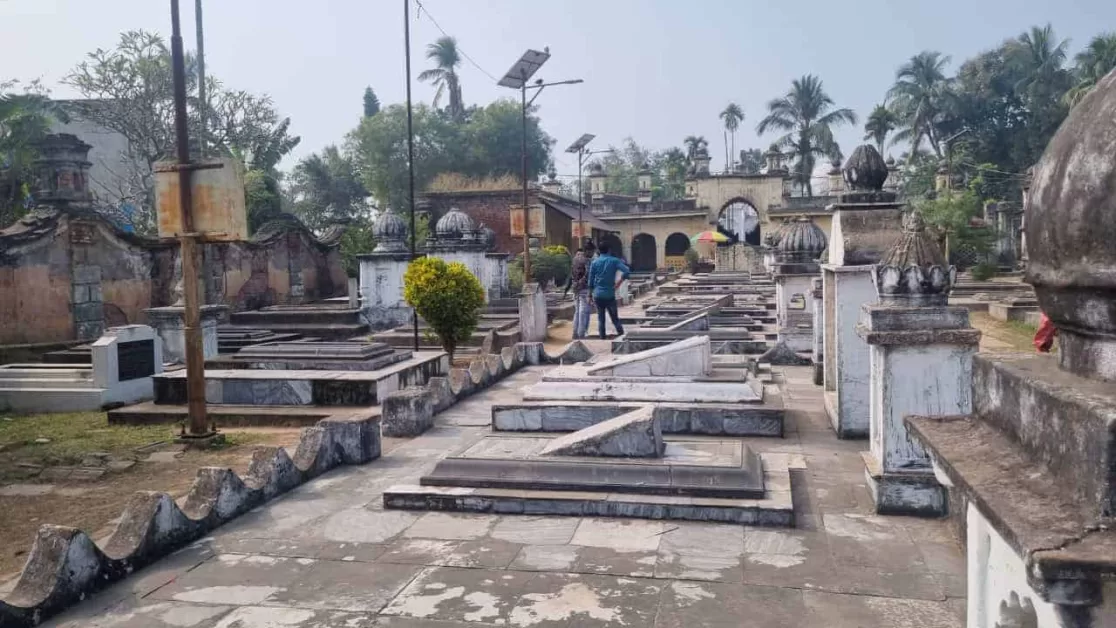
Then, after 20 minutes, we reach the Tomb of Azimunnisa Begum. She was the daughter of Murshid Quli Khan. Her father buried her alive to free her from sins. Then visit the Ichhaganj Ferry Ghat, and cross the Ganges. A ticket for an individual costs Rs. 5, and it takes 5 minutes.
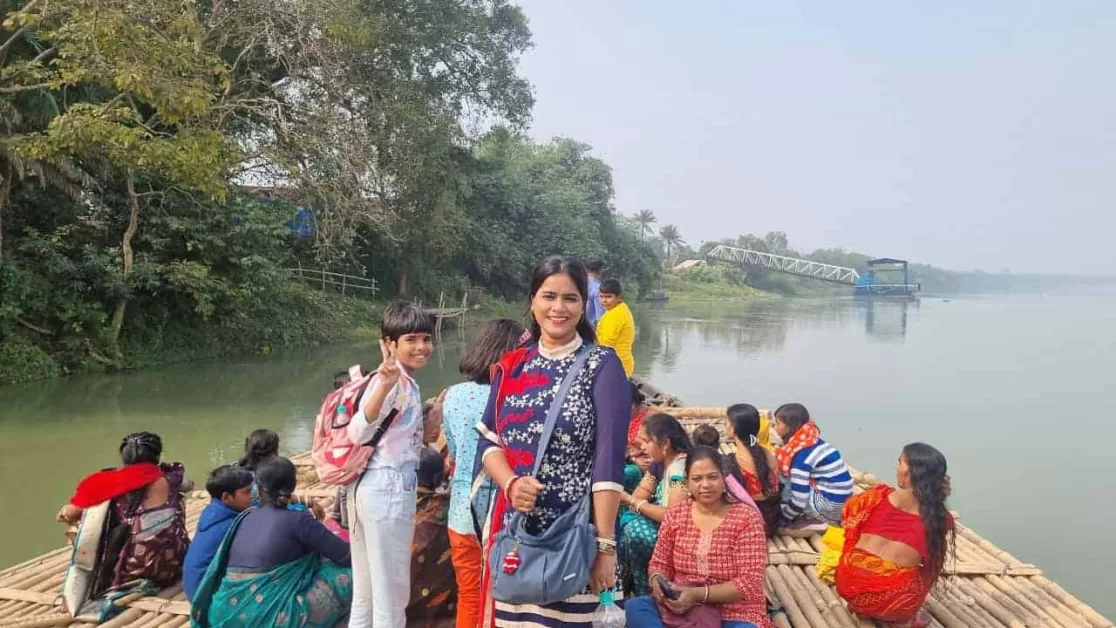
Take a toto from the ghat to view the sightseeing spots for Rs.600. First, visit Roshni Bagh, which houses the tomb of the second Nawab of Bengal, Suja Uddin, built by him. There is no entry fee, and the place is open from morning to evening. Guides are there, and they cost around Rs. 50.
Next, we visit Khoshbagh, the tomb of the last independent Nawab of Bengal, Siraj ud Daulah, and his ancestors. The place is open from morning till 4.30 p.m.
After that, visit the Jagabandhu Dham or Dahapara Dham. The temple is situated in a vast area, and it is open all day. But the main temple remains open from 5 a.m. to 11 a.m. and 4 p.m. to 8.30 p.m. If people arrive by 12.30, they can enjoy the Mahaprasad distribution.
Kiriteswari Temple is one of the most renowned Sati Piths in West Bengal. Buy flowers and sweets from the outside and offer them to the goddess. The temple is open all day. With a coupoun visitors can take prasad at noon. Then visit the Kiretswari Gupta Mandir; it is said to be the first temple. There is a ghat near the mandir offering a peaceful environment.
On the banks of the Bhagirathi River is the Char Bangla Temple in the Azimganj area of Murshidabad. It is one of the finest exhibitions of the Terracotta culture in Bengal. It has four temples in one garden, showcasing mesmerising artefacts and character.
After a little walk, one can find the Bhavaniswar Mandir. It has a great height, has eight entrances and one large Shiv Ling. Opposite this temple is the Raj Rajeshwari Temple. The deity residing here is the goddess Durga, so during Durga Puja, a major celebration takes place. Visitors coming during this time can enjoy the essence of a village’s Durga Puja.
Then see the Panchmukhi Shiv Mandir located on the banks of the Ganges. It is a 350-year-old terracotta Shiv Temple with beautiful surroundings. It is open from 6 a.m. to 7 p.m.
The last destination for the second day was Murshidabad area’s Azimganj locality’s most infamous Jain Temple. This temple is open all day. It will take you about five hours to view all the places on this side of the Ganges.
Day 3 Baharampur Tour
On the third day, we first went to Murshidabad Bus stand, the toto fare was Rs. 10. This day, the plan is to explore all the tourist spots in Baharampur. Then, from here, an auto will take visitors to their destination for Rs. 25. It takes 30 minutes to reach.
The R. K. Banerjee Museum is 650 meters from the Baharampur Bus Stand. The ticket fee is Rs. 10, and it is open from 10 a.m. to 6 p.m. Next, visit the Bishnupur Kalibari, where Maa Kali is in the form of Karunamoyee.
The next destination was the Dutch Cemetery, which has 47 tombstones for Dutch businessmen from the 18th century. The next stop was at Byaspur Shiv Mandir, constructed in 1811 and featuring a large statue of Shiv and Parvati. Visitors can offer prayers twice a day. It is open from 6 a.m. to 2 p.m. and 4 p.m. to 8 p.m.
Next destination was the Cossimbazar Palace of Roys, which charges entry fees of Rs. 50. The palace has a ballroom, Durga and chandi temple. Afterwards, go to Cossimbazar Sripur Palace, a historical palace built by Srikanto Nandy. Entering the palace is forbidden, and tourists can view it from the outside.
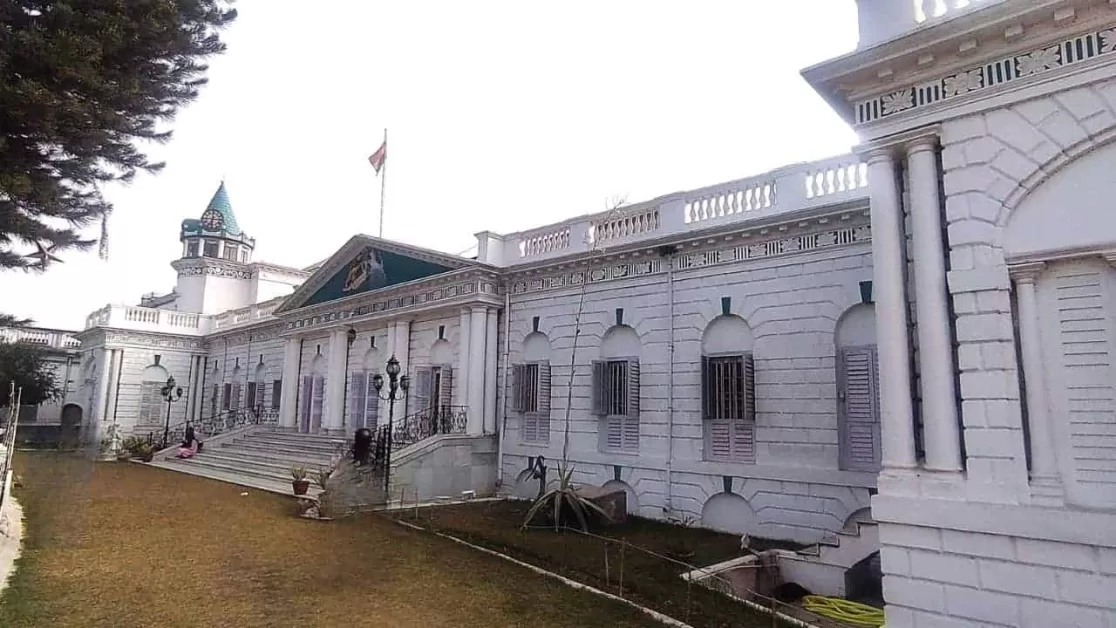
Near the palace is Old English Cemetery, where many British officers and their families rest, including the first wife and daughter of Warren Hastings. Our last stop in Baharampur City is the Pataleshwar Temple and Sati Daha Ghat.
In front of the temple is a 40ft Shiv Statue and a large garden. Inside the Pataleshwar Mandir, there is a Shiv Ling that has arisen from the ground. Then, behind the temple is a Ghat, known as Sati Daha Ghat. From the Baharampur Bus Stand, we take an auto back to Murshidabad to reach the railway station.
Conclusion
The tour guides of Murshidabad and Baharampur will help visitors navigate the city. The place has an important historical significance. People who love history, Indian culture, and traditions will enjoy touring the area. From the famous Hazar Duari to Kathgola, Dutch Cemetery and other palaces. It has many beautiful temples dedicated to Lord Shiva, Goddess Durga and Kali. People can easily tour the city via Toto, auto and Tanga; everything is easily accessible.
