Which is the first National Park in India? Jim Corbett?
Indian forests cover nearly 23% of the landmass and have many ancient forests and wildlife sanctuaries. These forests are home to various indigenous plants and animals. But do you know which is the First National Park in India?
Ramganga National Park is the first national park in India, renamed in 1955 after independence. It was established in 1936 as Hailey National Park in the Himalayan foothills of the United Province (present Uttarakhand) under Governor Malcolm Hailey.
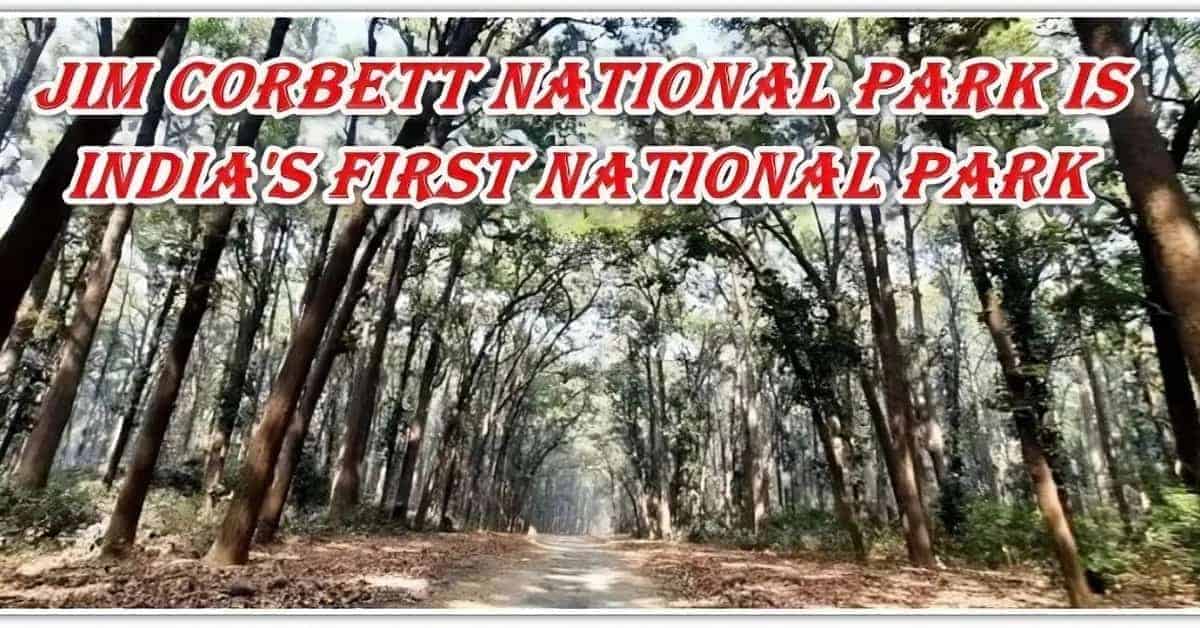
In 1956, Hailey National Park was officially renamed Jim Corbett National Park in honour of the brave hunter and naturalist Jim Corbett. Jim Corbett is known for killing man-eating tigers in the forests and Wildlife of India and saving the lives of people nearby.
Of the 104 national parks in our country, Jim Corbett National Park is the first and oldest national park in India and Asia. The Indian government has always taken active steps to protect the forested lands and stop globalisation from robbing nature.
All About Jim Corbett National Park
Jim Corbett National Park’s old name
Jim Corbett National Park, located in the foothills of the Himalayas, was initially named Hailey National Park, later changed to Ramganga National Park, and then to its present name.
Where is Jim Corbett located?
The Jim Corbett National Park is 50 km northwest of Ramnagar, Uttarakhand, in the Nainital district and the Pauri Garhwal district of southern Uttarakhand, pin 244715.
How to reach Jim Corbett National Park
Ramnagar station is the nearest railway station to the Jim Corbett Tiger Sanctuary in India, approximately 12 km away. The distance from Delhi to Jim Corbett is 244.6 km by road. It takes around 5 hours to cover this distance by car. Nainital is 66.8 km away from the national park. The distance from Dehradun to Jim Corbett is 177.3 km and takes approximately 4 hours by car.
Rules and regulations are followed in Jim Corbett National Park
- Visitors must obtain a permit before entering the park.
- Maintain a safe distance from the wild animals.
- Two adults and children (under 12) can be accommodated in a room in the tourist zone.
- Tourists must wear clothing that blends into the surroundings (e.g., olive green or khaki).
- You must get a clearance certificate before leaving the reserve.
- Driving after sunset is forbidden.
- Visitors must not play transistors or tape recorders, and must turn down the volume of their phones and stereos.
- Blowing horns and driving above the speed limit are prohibited.
- Guests are not allowed to cook in the park. Bringing alcohol and non-vegetarian food is not permitted.
- The national park is out of bounds after sunset. Visitors must not enter restricted zones.
- You cannot light a fire or smoke inside the park.
- You must drive vehicles on designated routes. You must not cause damage to any animal or plant.
- Travellers must not litter the park.
- Teasing, shouting, and feeding animals are prohibited.
- Visitors should not use flashlights to photograph wildlife.
- The entry permit is non-transferable.
- Visitors must not get out of the vehicle during the safari.
Jim Corbett National Park Jungle Safari
Like Bhadra Wildlife Sanctuary, Corbett National Park offers jungle safaris in six zones: Bijrani, Jhirna, Dhikala, Dhela, Durgadevi, and Sitabani. Types of safaris available in the forest are as follows:
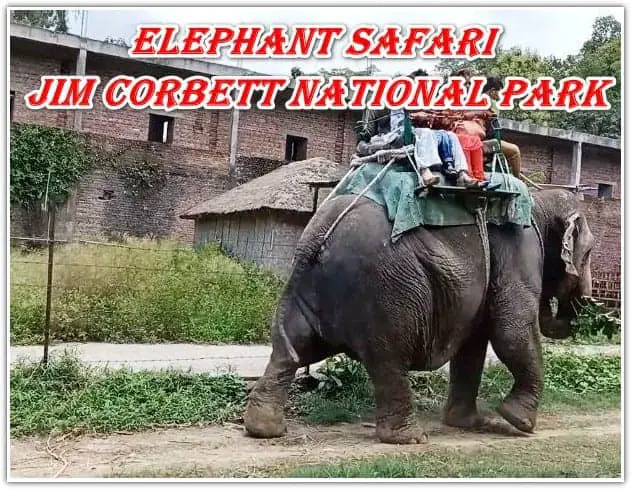
Jim Corbett Elephant Safari
Tourists ride on the back of Indian elephants to explore the mysterious wild. This tour starts from the Durgadevi gate and continues to the Birjani region. After a detailed area tour, the trip ends at Halduparao, on the opposite side. Elephant safaris are available for the Bijrani, Dhikala, and Sitabani zones.
The Elephant Safari timings
The Elephant Safari in Jim Corbett Forest has two time slots.
- Morning- 06:00 AM – 08:00 AM
- Afternoon- 04:00 PM – 06:00 PM
The Elephant Safari lasts approximately 2 hours, with a 30-minute drive to the location.
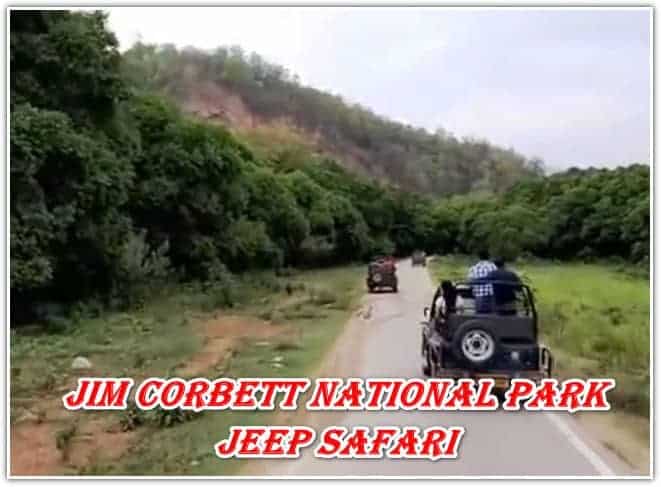
Jim Corbett National Park Jeep Safari
Jeeps are the fastest and most convenient way to explore the forest. The jeep safari has two different paths. One covers the regions of Bijrani, Sitabani, and Jhirna.
The other path tours the entire Durgadevi zone. The safari cost in this zone is slightly higher than in the others. Tourists can book these jeep safaris online for all routes. A maximum of 6 people is allowed in each jeep.
Jeep Safari Inclusions: Permission of Jeep, Driver, CTR, Permit and All Entries and Taxes. Guide fees have to be paid by the tourist.
Jeep Safari Timings
The Jeep Safari in Jim Corbett National Park has two time slots.
In Summer
- Morning- 05:30 am – 09:30 am. Last entry 7 am.
- Afternoon- 03:00 PM – 07:00 PM. Last entry 04.30 pm.
In winter
- Morning- 06:30 am – 10:30 am. Last entry 8 am.
- Afternoon- 01:30 PM – 05:30 PM. Last entry 03.00 pm.
The Jeep Safari lasts approximately 3 hours.
Jim Corbett National Park Safari
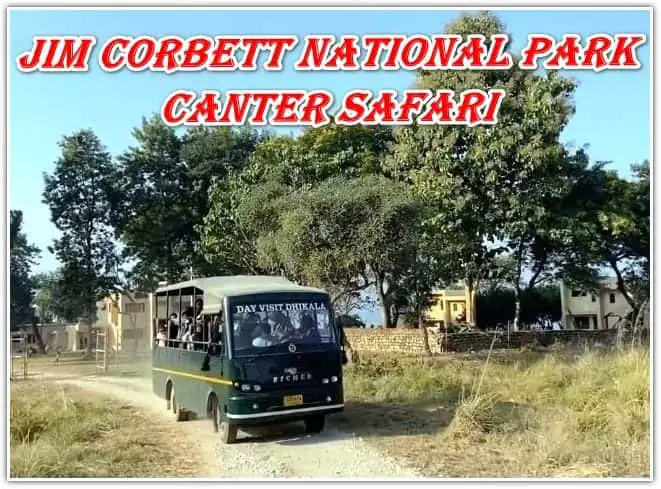
A Canter is a big bus that can accommodate 16 people at once. The Canter safari is used to visit the Dhikala zone and take tourists to their jungle resorts.
Canter Safari Inclusions: Permission of Jeep, Driver, CTR, Permit and All Entries and Taxes. Guide fees have to be paid by the tourist. No Pick-and-drop service is available from hotels.
Canter Safari Timings
The Canter Safari in Jim Corbett Forest has two time slots.
In Summer
- Morning- 05:00 AM – 11:00 AM.
- Afternoon- 11:30 AM – 05:30 PM.
In winter
- Morning- 06:00 AM – 10:30 AM.
- Afternoon- 11:30 AM – 05:30 PM.
The Canter Safari lasts approximately 6 hours.
Jim Corbett Wildlife Sanctuary safari online booking
Bookings for these safaris can be made both online and offline. Online booking is available only on the park’s website. Book the safari at least 30 days before to get an available slot. Personal details and ID proof are required during the booking process. Carry the same ID when going on safari for verification purposes.
Jim Corbett National Park visiting hours
Jim Corbett National Park is open weekly from 6:30 AM to 5:30 PM, but these hours sometimes change during the winter months.
Read Alipore Zoological Garden, Kolkata
Climate and temperature range in Jim Corbett National Park
This forest reserve lies in the foothills of the Himalayas, so the weather here remains colder year-round. Winter temperature varies between 5℃ to 25℃. The average summer temperature is 30℃. Heavy rainfall occurs from July to September.
Best time to visit Jim Corbett National Park
October to February is the best time to plan your trip to Corbett National Park. All zones of the park remain open at this time. The temperature ranges from 5℃ to 25℃ during this time, and precipitation is zero. The cold, dry winter weather makes it easier to explore the forest.
The majority of the forest is open to visitors from mid-November to June. While most of the forest remains closed during the monsoon, the Jhirna zone keeps its doors open year-round. The Bijrani zone, however, is open from October to June.
Monsoons can be dangerous due to flooding and frequent landslides, so it’s a good idea to avoid them during that time of year.
Jim Corbett National Park closing dates
The core zones remain closed from 15 June to 15 November, while the Bijrani zone is closed until 15 October. The buffer zone remains open year-round.
Read Ballavpur Wildlife Sanctuary | Deer Park, Bolpur, West Bengal
Best resorts and hotels in Jim Corbett National Park
The Jim Corbett National Park has remained a popular tourist spot since the mid-90s. It’s an important centre of Uttarakhand tourism. Thus, the state government has actively developed the area for tourist accommodation.
You can find a variety of resorts and hotels in the Corbett National Park, from luxurious forest resorts to budget hotels. The hotels and forest lodges are mostly concentrated in the buffer zone or outside the main forest. Some lodges are also inside the different zones, such as:-
Dhikala forest lodge
It’s a government-maintained forest rest house with all basic amenities provided. Rooms are limited, so you must book online before the trip. The lodge balcony offers a high chance of seeing animals in the middle of the Dhikala zone. You can get food from the canteen, which is open all day. There is also a restaurant on the same campus.
Gairal rest house
The Gairal rest house is in a remote area with few modern amenities. It’s not a place for maximum comfort, but you can experience the raw beauty of nature while staying here. The hotel is powered by solar cells. The staff are mainly native to the area and have excellent local knowledge of the forest.
Sarapduli Forest Rest House
Sarapduli Forest Rest House is located in the deepest part of the Dhikala zone. The Ramganga River flows near this hotel, and tourists often see a gharial resting on the ground from the window. There is a shared kitchen where you can cook food or provide ingredients for the chef to cook. Power is supplied through solar panels and inverters. There are two rooms: a double and a triple.
There are also luxury hotels such as Corbett Leela Vilas, Infinity Resort, and Corbett River View Retreat. They are in the outer boundary of the forest or the buffer zone. These hotels have a reliable power supply and are equipped with high-end amenities and facilities, including TVs, ACs, and swimming pools.
Jim Corbett National Park is famous for which animal
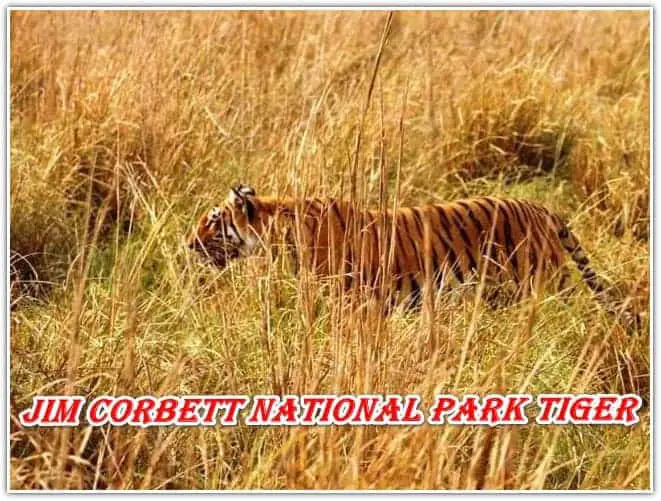
The 1st National Park of India (Jim Corbett) covers 521 square kilometres and is home to many species of flora and fauna. Under Project Tiger, this tiger sanctuary became the first tiger reserve in India due to its impressive population of Royal Bengal Tigers. Even today, Jim Corbett has the most protected tigers among India’s forests.
According to the latest survey, there are 252 tigers inside the reserve. Dhikala and Bijrani are the best zones for tiger sightings. Other mammals and reptiles can also be found here.
Birds in Jim Corbett National Park
The Durgadevi zone is a well-known bird-watching destination. Bird watchers from all around visit Jim Corbett National Park to study different avian species and admire their appearance. Peacock, Jungle fowl, Partridge, Khaleej pheasant, Drongo, Duck, Teal, Stork, etc., are the common birds in Sultanpur National Park.

Jim Corbett National Park tiger population
Jim Corbett National Park has the highest number of Royal Bengal tigers of any forest in India. This year, it increased by 21, bringing the total number of resident tigers to 252. Apart from that, 14 tigers regularly visit the protected forest area from the nearby mountains.
International Tiger Day
Tigers are the mighty beasts of the jungle who often fall prey to the hands of humans and lose their lives. In the 19th and early 20th centuries, the rich and the royal families exploited this species, endangering its existence. As a result, tigers came to the brink of extinction in the early 2000s.
In 2010, the idea of International Tiger Day emerged at the Saint Petersburg Tiger Summit in Russia. We celebrate this day on 29th July to raise awareness towards tiger conservation. Today, the tiger population is in a much better position, clearly showing us the importance of this day.
Corbett Tiger Reserve (CTR)
The Corbett Tiger Reserve is the first Tiger reserve in the country. It looks after the health and well-being of the Royal Bengal Tigers in Jim Corbett National Park. Currently, 252 tigers are tended to and monitored to conserve the tiger population.
Endangered species in Jim Corbett National Park
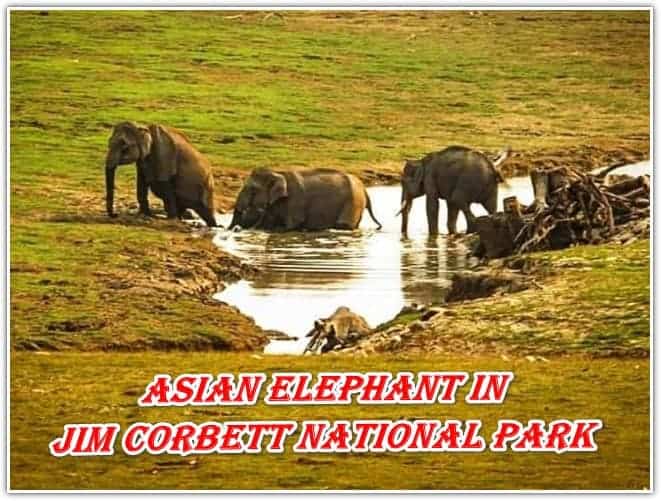
As its population decreases, this forest is mainly responsible for preserving India’s national animal, the Tiger. Another endangered mammal found here is the Asian elephant. The park also preserves the Gharial, an endangered reptile and the oldest crocodilian.
Flora and Fauna of the First National Park in India
Jim Corbett National Park is an intoxicating wonder of nature. This moist deciduous forest consists of rolling hills, vast grasslands, ravines, and tall deciduous trees. Sal, Mango, Peepal, Rohini, and Haldu trees comprise more than 70% of the landmass.
The Royal Bengal Tigers are the representative animal here. Mammals apart from tigers include langurs, Wild boars, Asian Elephants, jackals, leopards, and various species of deer, Such as Sambar, Barking Deer, and nilgai. Crocodiles, Pythons, King Cobras, Russell’s vipers, and lizards are the prominent reptiles found here.
Jim Corbett National Park is in the Himalayan mountains and has many water bodies. We can observe a variety of flora here. Freshwater flora and alpine flora are the dominant ones. The alpine flora is less abundant near the entrance and becomes more abundant as you move deeper into the forest.
Common trees are Sal forests, Chaurs, Khair, etc. We can see the freshwater plants near the Ramganga River. Freshwater vegetation includes Polygonum, Veronica, Hypericum, Ranunculus, etc. There are over 600 plant species in this park.
Trees in Jim Corbett National Park
Corbett National Park is mainly a deciduous forest. Therefore, prominent trees here are Sal, Shimal, Kharpat, Sissoo, Khair, etc. You can see Conifers around the elevated ridges in a tiny portion of the park. The only conifer species on the park premises is the Chir pine (Pinus roxburghii).
Banj oak (Quercus leucotrichophora) is an exclusive Himalayan tree found here. Palm and date are some common fruit-bearing trees. There are some flowering trees, such as Shimul, Madaar, and Dhak. You can also find teak, eucalyptus, jacaranda, and silver oak, among others. Bamboo plantations occupy a vast portion of the forest.
Flowering Trees
Trees like Kachnar (Bauhinia variegata), Dhak (Butea monosperma), Shimul (Bombax ceiba), Madaar (Erythrina indica), and others liven up the forest with their colourful flowers. Kachnar (Bauhinia variegata) bears pink and white flowers, while Shimul (Bauhinia variegata) flowers cover the tree in bright red.
Dhak has a fiery, bright-orange flower called Flame-of-the-forest. Indian Coral, or Madar, flowers have a beautiful mix of red and orange. Their long and sleek petals combine to give the flower an elegant look. Amaltas (Cassia fistula) is another flowering tree with chandelier-shaped, bright yellow flowers.
Shrubs
Shrubs are mainly found on the bank of the Ramganga River, and castor bushes are planted here to feed animals. Maror Phali, Karaunda, and Hisar are three noticeable fruit-bearing shrubs of this region. Karaunda also bears beautiful pink wildflowers. 51 species of shrubs have been recorded in this area.
Bamboo
Jim Corbett National Park is known for its different bamboo plants; more than 33 varieties are found here. Dendrocalamus strictus, or Male bamboos, are more pronounced than females. The peculiar growth process of bamboo can be observed well here.
Jim Corbett National Park packages
Various tourism organisations offer a range of tour packages. These include detailed itineraries for each day. Buying a tour package ensures safe travel and allows you to complete all activities within the allotted time. Some popular tour packages offered by the official website of Jim Corbett National Park are as follows:
Royal and adventurous tour for the Whole Park visit (Dhikala and Bijrani)
The tour duration is four nights and five days. The cost for two adults is Rs 39700. Stay at a luxury hotel outside the core area and the forest resort inside the Bijrani zone. All meals and safaris are covered, too.
16 places to visit near Jim Corbett National Park
While touring the forest for animals, visit the nearby tourist spots to learn more about the place and its culture.
- Garjiya Temple, Ramnagar, Uttarakhand
- Corbett Falls Nainital
- Corbett Museum Kaladhungi
- Sona Nadi Range
- Kyari Camp
- Ramganga Dam Uttarakhand
- Dhangarhi Museum
- Kosi River
- Sitabani Temple and Wildlife Reserve
- Bhowali Uttarakhand
- Gujru Garhi
- Hill Station near Kathgodam
- Nainital tourist spots
- Bhimtal hill station and lake
- Sattal lakes
- Mukteshwar Temple
Garjiya Temple, Ramnagar, Uttarakhand
Garjiya Temple is a famous state Shakti Shrine. This beautiful temple was built on a rock in the middle of the Kosi River. It takes around 30 minutes to reach this holy temple from the Ramnagar bus stand. The occasion of Kartik Poornima is a mighty affair here. A big fair is organised for the thousands of devotees who attend during this time.
Corbett Falls Eco Park, Nainital
Corbett Falls provides a picturesque view of white water from the Barhani Range and has become a popular picnic spot. Kaldhungi is the closest region to the falls, at a distance of 4 km. To reach the falls, tourists must trek 1.5 km.
Corbett falls timings and entry fees
The entry time is 8 a.m. to 5 p.m. It was closed in July and September due to rainfall. The entry fee is 50 rupees per person, and the Wheelers’ charge is 100 rupees.
Corbett Museum Kaladhungi
The house of the great naturalist Jim Corbett is now a heritage museum. It’s dedicated to the bravery of this renowned hunter, and his items are displayed here. It’s near Kaladhungi at Choti Haldwani inside the park premises. An entry ticket costs rupees 10 for Indians and rupees 15 for foreigners.

Sona Nadi Range
Sonanadi Wildlife Sanctuary, part of Corbett National Park, is home to the beautiful Sona Nadi range. Tourists visit this range for its spectacular scenery and diverse bird species.
Kyari Camp
To the east of the Kosi River is the Kyari village, where you can find the exciting Kyari Camp. Here, you can experience camp life with leisure activities like rock climbing and river rafting.
Ramganga Dam Uttarakhand
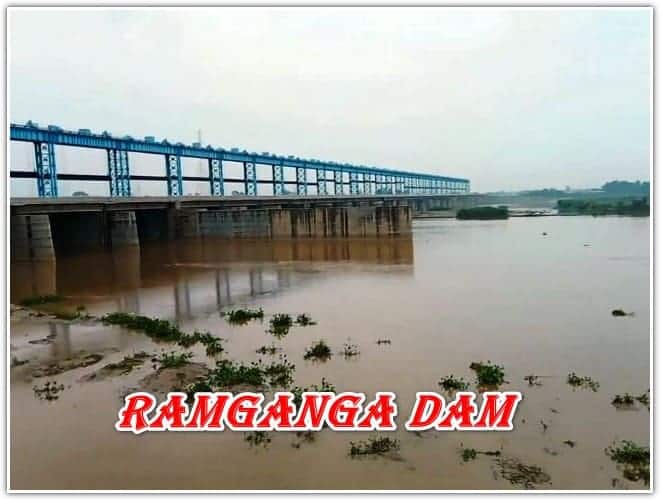
The Ramganga Dam is an embankment dam on the Ramganga River. Due to its close proximity to Kalagarh, it’s also known as the Alagarh Dam. Uttarakhand Jal Vidyut Nigam Limited constructed it in 1974. The view of the forest from the dam is calm and peaceful.
Dhangarhi Museum
Near the Dhangarhi gate is the Dhangarhi Museum, one of the oldest structures on Corbett’s grounds. It showcases Jim Corbett’s life and work, as well as artworks inspired by the forest. The entry fee is 10 rupees.
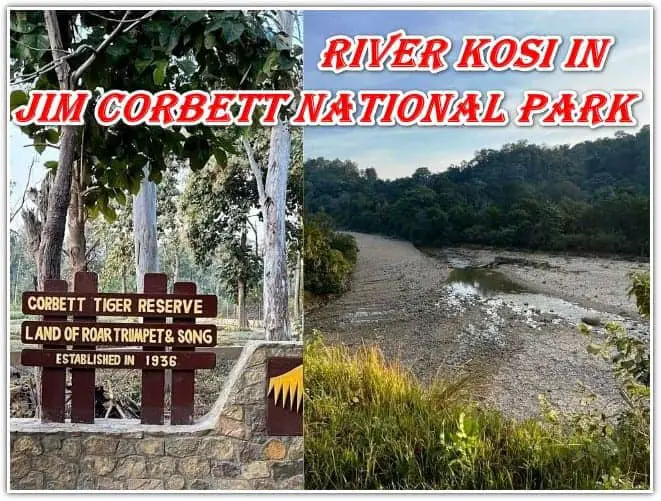
Kosi River
Kosi River is the main river flowing through the forest. It originates from Dharpani Dhar at Almora. It’s perennial and the primary water source for the park’s wildlife. It also provides water for farming in the nearby villages. Visiting the riverside at the end of the day may result in a wild-animal encounter.
Sitabani Temple and Wildlife Reserve
It’s a temple dedicated to the Ramayana character Sita. According to local legends, Sita spent her life in exile before Agnipariksha. At present, it’s a holy place among Hindus, with many devotees visiting it every day. Along with the temple, visitors can also enter the wildlife reserve.
Bhowali Uttarakhand
It’s a toy town in the centre of the Nainital district. A wonder of nature in the Kumaon Valley, this town is famous for its refined fruit production, including apricots, strawberries, and peaches.
Gujru Garhi
Gujru Garhi is a temple at the highest point of Nainidanda Hill Station. It’s a historical fort with some prehistoric caves on its side. This historical site is 2,400 m above sea level. During winter, heavy rainfall makes it hard to access. Tourists often hike to reach the temple.
Hill Station near Kathgodam
Kathgodam is one of Uttarakhand’s most famous hill stations. The town is situated at an elevation of 1,817 ft above sea level on the banks of the Gaula River. Kathgodam means timber depot, and thus, it is a top centre for collecting forest products in the region.
Nainital tourist spots
The beautiful hill station of Nainital attracts thousands of tourists to Uttarakhand every year. It’s a popular tourist-friendly place. You can find many shops selling local goods here. The town gets its name from the beautiful eye-shaped Naini Lake, the town’s main attraction.
Bhimtal hill station and lake
Bhimtal is another lake city near Nainital. It’s a lesser-known town compared to Nainital. Lake Bhimtal sits at the centre of this town and is known for its scenic beauty. There is a small island in the middle of the lake with an aquarium for informative purposes.
Sattal lakes
Sattal is a natural wonder in the Kumaon. It’s an interconnection of seven taals, or lakes, at 1370 m above sea level, which translates to “Seven Lakes.” The area is surrounded by dense forests, making it an excellent place for bird watching.
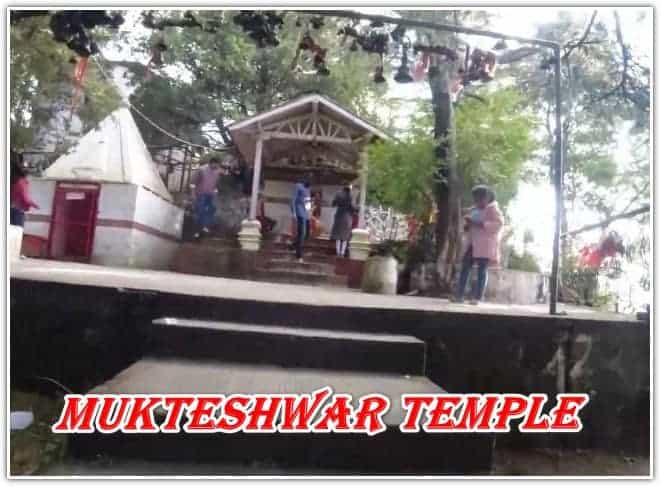
Mukteshwar Temple
Mukteshwar is an exotic hill station situated 2,285 m above sea level in Nainital. Its beauty is in its serenity. Surrounded by the Himalayas, the town is somewhat secluded from the general tourist crowd. It’s perfect for a calming vacation in the hills.
Total National Parks in India
The latest survey said India now has 104 national parks. As global warming harms our plant and animal life, safeguarding them has been achieved through the establishment of protected reserves. Indian forests are turned into national parks, wildlife sanctuaries, reserve forests, etc.
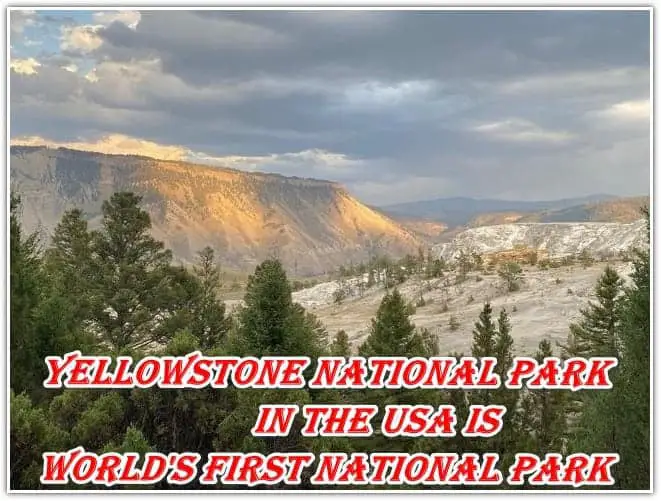
World’s first National park
World’s First National Park: Yellowstone National Park, established in the USA in 1872, is the world’s first national park. President Ulysses S. Grant announced the park’s formation to protect the land from private investors.
Read All about Epping Forest and walks
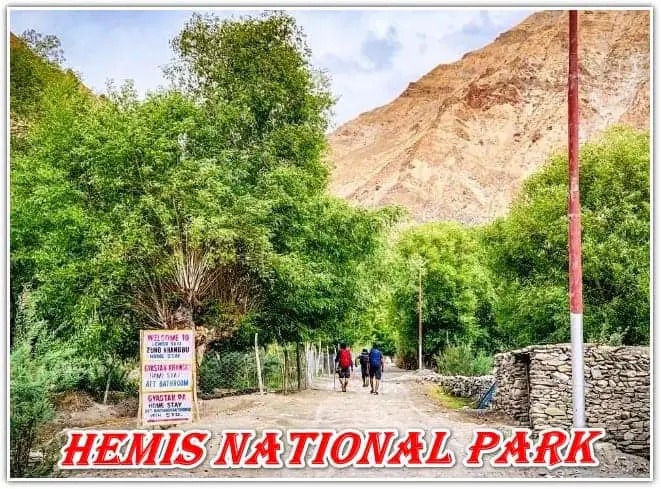
The largest national park in India
The largest national park in India is Hemis National Park, covering 4,400 sq km and located in the vast, barren lands of the Ladakh valley in Jammu and Kashmir. It was established in 1981 and named after the adjacent Hemis Monastery. The park is home to Snow Leopards.
The smallest national park in India
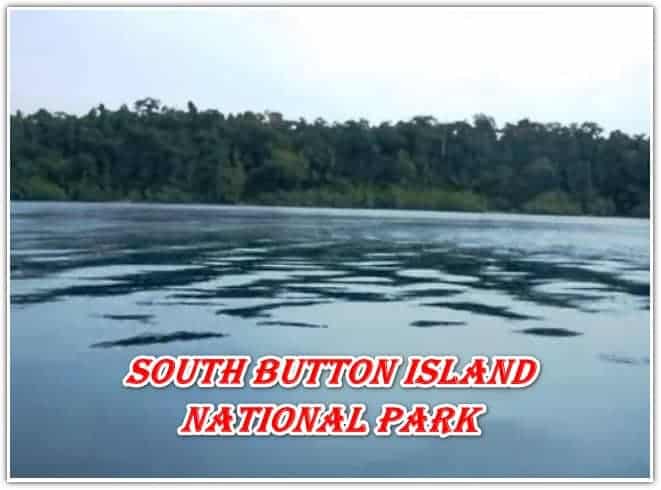
The smallest national park in India is the South Button Island National Park. It’s in the Andaman and Nicobar Islands and covers a total area of 0.44 sq km.
This park is an extension of the Rani Jhansi Marine National Park. It protects sea creatures such as Dolphins, Blue whales, and sea turtles.
What is the nearest railway station to Jim Corbett National Park?
Ramnagar railway station is the closest railway station to Corbett National Park. Trains from major cities like Delhi, Lucknow, and Chennai.
Which river flows through Jim Corbett National Park
Ramganga, Kosi and Sonanadi are the three main rivers flowing through this forest.
Which animal is protected in Jim Corbett National Park
The Royal Bengal tiger is protected in this park under the Project Tiger Initiative.
How many gates are in the Jim Corbett National Park?
The park has four gates: the Dhangadi (Dhikala zone) gate, Amdanda (Bijrani zone) gate, Jhirna (Zhirna zone) gate, and Durga Devi (Lohachaur zone) gate. The entry timing through each gate is fixed, so visitors must have advance permission.
Which jeep safari is best in Jim Corbett National Park, morning or afternoon, during the first week of November?
The weather remains chilly during the first week of November. Because of the thick fog, tourists can’t see things properly. Thus, a jeep safari in Jim Corbett National Park during the afternoon is recommended.
Information about the Peacock of Jim Corbett National Park
Jim Corbett National Park houses a wide range of flora and fauna, including more than 650 bird species (resident and migratory). The sight of India’s national bird, the Peacock, in Jim Corbett National Park is a delight for bird watchers.
Is it mandatory to wear shoes in Jim Corbett National Park?
Wear comfortable shoes while on a Jim Corbett National Park safari. You will encounter many poisonous and harmful insects and bushes when visiting Jim Corbett National Park.
Thus, it is essential to wear clothing that covers your entire body, especially shoes. These forests grow in the North Indian states and the Middle East Himalayas (at upper and middle altitudes).
Conclusion
Jim Corbett National Park (the First National Park of India) is the perfect place to escape fast-paced city life. From the dense forest to the vast grasslands and riversides, it’s perfect for both solo and group trips. The quiet and calm of forests will fill your life with serenity, while the excitement of adventure activities will be like a breath of fresh air. Jim Corbett is a place with the perfect balance needed for a great trip.
Forest Articles:-
- Valki Machan Tour | Kolkata to Valkimachan Bardhaman, West Bengal
- Gurgaon Sultanpur Bird Sanctuary timings, entry fee
- Where is Betla National Park? Address, Timings, Entry Fee
- Chintamani Kar bird sanctuary
- Tropical and Subtropical Dry Broadleaf Forests
- Gir National Park in Gujarat is famous for which animal?
- Different Types of Forests in India
- How to reach Ranthambore National Park
- Turahalli Forest cycling trails, trekking, hiking, and bike ride
